



Loading page…
Ultrasound and Radiology
Price Starts From | No Hidden Charges
Loading price…
₹1,200/*
*Prices may vary by city and chosen centre. Inclusive of sonologist report. No hidden charges.
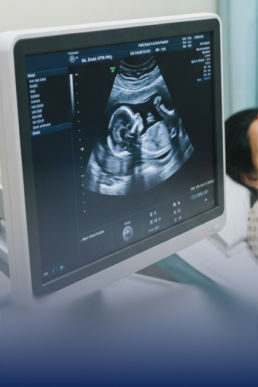
An NT Ultrasound (Nuchal Translucency Scan) is the most important first-trimester screening test in pregnancy. It measures the fluid-filled space at the back of the baby's neck — called the nuchal translucency — between 11 weeks and 13 weeks 6 days of pregnancy. An increased NT measurement is associated with a higher risk of chromosomal abnormalities including Down syndrome (Trisomy 21), Edward syndrome (Trisomy 18), and Patau syndrome (Trisomy 13). The NT scan is not a diagnostic test — it assesses risk, not certainty. It is typically combined with first-trimester blood tests (beta-hCG and PAPP-A) in a Combined First Trimester Screening panel to calculate an individual risk score. This combined screening has a detection rate of over 90% for Down syndrome. The scan additionally confirms gestational age, checks for a heartbeat, identifies multiple pregnancies (twins), and assesses the nasal bone (NB) — another marker for chromosomal risk. No radiation. No injections. Completely safe for mother and baby. Important: The NT scan has a strict gestational window — it must be performed between 11 weeks 0 days and 13 weeks 6 days (CRL 45–84 mm). Missing this window means the scan cannot be performed. Book early.
Key benefits of this package include:
Nuchal Translucency (NT) measurement — fluid at the back of the neck; ≥3.5 mm is a significant risk marker
Nasal bone (NB) presence or absence — absent nasal bone is associated with Down syndrome risk
Risk calculation for Trisomy 21 (Down syndrome), Trisomy 18 (Edward syndrome), Trisomy 13 (Patau syndrome)
Combined with PAPP-A and beta-hCG blood tests for a risk score (Combined First Trimester Screen)
Foetal heartbeat — presence and rate
Crown-Rump Length (CRL) — confirms gestational age and due date
Foetal number — confirms singleton or multiple pregnancy (twins/triplets)
Foetal movement — observed during the scan
Gross structural abnormalities — severe defects may be visible at this stage
Foetal position and lie
Placental location — early assessment of placenta position
Amniotic fluid — volume assessment
Uterine abnormalities — fibroids, uterine shape
Ovarian cysts — particularly corpus luteum cysts (common in early pregnancy)

Explore other scans and imaging services — book online or request a call back.

Pathology tests that pair well with your imaging — book home collection online.