


Loading page…
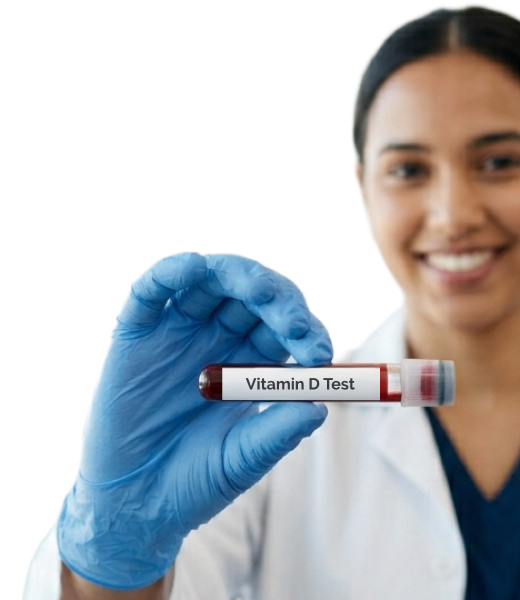
The Vitamin D test measures 25-hydroxyvitamin D (25-OH Vitamin D) — the main circulating form and the most accurate measure of...
Also known as: 25-OH Vitamin D Test · Vitamin D3 Test · Serum 25-Hydroxyvitamin D Test · Calcidiol Test · Vitamin D Deficiency Test
Limited Offer | Best Price Guaranteed
Loading price…
Loading price…
*Inclusive of home collection charges


The Vitamin D test measures 25-hydroxyvitamin D (25-OH Vitamin D) — the main circulating form and the most accurate measure of Vitamin D status in the body. Vitamin D deficiency is extraordinarily prevalent in India — paradoxically, despite abundant sunshine — affecting an estimated 70–90% of the population. Deficiency causes rickets in children, osteomalacia and osteoporosis in adults, muscle weakness, impaired immune function, and is increasingly linked to cardiovascular disease, diabetes, autoimmune conditions, and cancer risk. No fasting required.
Key benefits of this package include:
What Does the Vitamin D Test Measure?
| Level / Result | Possible Interpretation |
|---|---|
| < 10 ng/mL (Severe deficiency) | High risk of rickets (children), osteomalacia (adults), fractures, and severe immune impairment — urgent high-dose supplementation |
| 10–20 ng/mL (Deficiency) | Vitamin D deficiency — bone health, muscle function, and immunity compromised; supplementation required |
| 20–30 ng/mL (Insufficiency) | Below optimal — may cause subtle bone and muscle symptoms; supplementation recommended for most individuals |
| 30–100 ng/mL (Sufficient) | Adequate Vitamin D status for bone health and general physiological function |
| 40–60 ng/mL (Optimal) | Optimal range associated with best immune, bone, and cardiovascular outcomes |
| > 100 ng/mL (Upper safe limit) | High — risk of hypercalcaemia with very high levels; review supplementation dose |
| > 150 ng/mL (Toxicity threshold) | Vitamin D toxicity — hypercalcaemia, kidney stones, calcification; stop supplementation; specialist review |
Important Note: 25-OH Vitamin D is the correct test for assessing Vitamin D status — not 1,25-dihydroxyvitamin D (calcitriol), which is the active form but poorly reflects body stores. Vitamin D supplementation doses should be guided by the degree of deficiency, body weight, underlying conditions, and repeat testing at 3 months to confirm adequate response. Vitamin D toxicity from food and sunlight alone is essentially impossible — only excessive supplementation causes toxicity. All results must be reviewed by a physician.
Why Sun Exposure Alone Is Not Enough in India: The UV-B radiation needed for skin Vitamin D synthesis is only available when the sun's angle is high enough (roughly 10am–3pm, at latitudes below 35°). In India's cities, air pollution significantly blocks UV-B — studies show that Vitamin D synthesis from sun exposure in Mumbai and Delhi is dramatically reduced compared to rural areas. Additionally, most urban Indians spend their peak UV hours indoors. This combination of melanin protection, indoor lifestyle, pollution, and phytate-rich vegetarian diets makes routine Vitamin D supplementation virtually necessary for most urban Indians — but supplementation without testing can lead to either under-dosing (inadequate replenishment) or over-dosing (toxicity risk at very high doses). Testing first, then supplementing to target, is the safe and evidence-based approach.

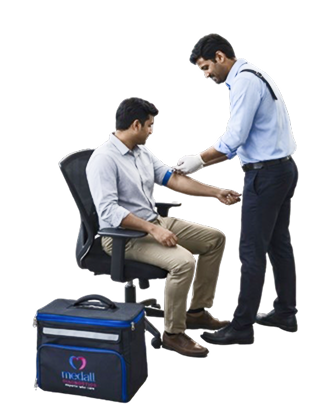
Book once, we handle the rest. Our certified phlebotomist arrives at your doorstep — your report is delivered within 24 hours.
Trusted by millions of Customers across South India — these are the tests our doctors recommend most.
Screens for anaemia, infections, and immune health