


Loading page…
The Ferritin test measures the level of ferritin — a protein that stores iron inside cells and releases it in a controlled mann...
Also known as: Serum Ferritin Test · Ferritin Level Test · Iron Storage Test · Ferritin Blood Test
Limited Offer | Best Price Guaranteed
Loading price…
Loading price…
*Inclusive of home collection charges


The Ferritin test measures the level of ferritin — a protein that stores iron inside cells and releases it in a controlled manner — in the blood. Serum ferritin is the most sensitive and reliable indicator of the body's total iron stores. Low ferritin is the earliest and most sensitive sign of iron depletion — often detectable before anaemia develops and before other iron markers (serum iron, transferrin saturation) become abnormal. High ferritin can indicate iron overload, liver disease, or significant inflammation. No fasting required.
Key benefits of this package include:
What Does the Ferritin Test Measure?
| Level / Result | Possible Interpretation |
|---|---|
| < 12 ng/mL (Iron deficient) | Iron stores depleted — iron deficiency anaemia likely or imminent; iron supplementation required |
| 12–30 ng/mL (Low-normal — iron-poor) | Borderline — may cause symptoms (fatigue, hair loss); monitor closely; dietary review recommended |
| 30–150 ng/mL (Normal — females) | Adequate iron stores — normal haematological function |
| 30–300 ng/mL (Normal — males) | Adequate iron stores |
| 300–1,000 ng/mL (Elevated) | Possible iron overload, liver disease, or inflammatory state (ferritin is an acute-phase reactant) |
| > 1,000 ng/mL (Markedly elevated) | Significant iron overload — hereditary haemochromatosis, transfusion haemosiderosis, haemophagocytic syndrome, severe liver disease, or hyperinflammatory state |
| > 10,000 ng/mL (Extremely elevated) | Macrophage Activation Syndrome (MAS) / Haemophagocytic Lymphohistiocytosis (HLH) — life-threatening emergency |
Important Note: Ferritin is an acute-phase reactant — it rises with inflammation, infection, and liver disease even when iron stores are not overloaded. This means ferritin can appear falsely normal or elevated in iron-deficient patients with co-existing inflammatory conditions. In this setting, additional tests — serum iron, TIBC (Total Iron-Binding Capacity), transferrin saturation — are needed for complete iron status assessment. All results should be interpreted by a physician.
Low Ferritin Without Anaemia — Recognising 'Iron Deficiency Without Anaemia': Many patients — particularly women with fatigue, hair loss, difficulty concentrating, and restless legs — have serum ferritin below 30 ng/mL with a normal haemoglobin. This condition, sometimes called 'latent iron deficiency' or 'iron deficiency without anaemia,' responds to iron supplementation with significant improvement in symptoms, even when Hb is normal. Treating to a ferritin target above 50–70 ng/mL resolves symptoms in most patients — making ferritin testing (rather than Hb alone) the correct investigation for these complaints.

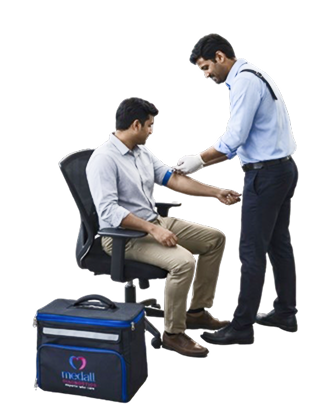
Book once, we handle the rest. Our certified phlebotomist arrives at your doorstep — your report is delivered within 24 hours.
Trusted by millions of Customers across South India — these are the tests our doctors recommend most.
Screens for anaemia, infections, and immune health