


Loading page…
The Albumin test measures the level of albumin — the most abundant protein in your blood — produced almost entirely by the live...
Also known as: Serum Albumin Test · Albumin Blood Test · Albumin Level Test · ALB Test
Limited Offer | Best Price Guaranteed
Loading price…
Loading price…
*Inclusive of home collection charges


The Albumin test measures the level of albumin — the most abundant protein in your blood — produced almost entirely by the liver. Albumin plays essential roles in maintaining fluid balance, transporting hormones and medications, and supporting overall body function. Low albumin levels are a key clinical indicator of liver disease, kidney disease, and malnutrition — making this one of the most informative single-parameter tests in a routine pathology panel. It is a standard component of the Liver Function Test (LFT) and is also routinely checked in patients with kidney conditions. No fasting required.
Key benefits of this package include:
What Does the Albumin Test Measure?
Serum Albumin (ALB) Unit of measurement: g/dL (grams per decilitre) Sample type: Serum (blood) Fasting required: No
What Albumin Levels Indicate:
Albumin Level
Possible Interpretation
3.5 – 5.0 g/dL (Normal)
Healthy liver function and adequate protein nutrition
3.0 – 3.5 g/dL (Mildly low)
Early liver dysfunction, mild malnutrition, or chronic inflammation
2.5 – 3.0 g/dL (Moderately low)
Significant liver disease, kidney disease (nephrotic syndrome), malnutrition
Below 2.5 g/dL (Severely low)
Advanced liver failure, severe malnutrition, critical illness
Note: Albumin results should always be interpreted by a qualified physician alongside other LFT parameters, clinical symptoms, and medical history.
Why Albumin Is Measured Alongside Other LFT Parameters: A standalone low albumin result is informative — but far more meaningful when combined with AST (SGOT), ALT (SGPT), Bilirubin, Alkaline Phosphatase, and Total Protein. Together, these parameters provide a complete picture of liver synthetic function and help distinguish between acute liver injury and chronic liver disease.

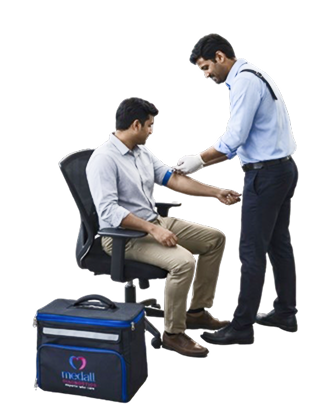
Book once, we handle the rest. Our certified phlebotomist arrives at your doorstep — your report is delivered within 24 hours.
Trusted by millions of Customers across South India — these are the tests our doctors recommend most.
Screens for anaemia, infections, and immune health