


Loading page…
The Glucose Challenge Test (GCT) is a non-fasting, first-line screening test for Gestational Diabetes Mellitus (GDM) — a form o...
Also known as: GCT Test · 50g Glucose Challenge Test · 1-Hour GCT · Gestational Diabetes Screening Test · O'Sullivan Test
Limited Offer | Best Price Guaranteed
Loading price…
Loading price…
*Inclusive of home collection charges


The Glucose Challenge Test (GCT) is a non-fasting, first-line screening test for Gestational Diabetes Mellitus (GDM) — a form of diabetes that first appears during pregnancy. A 50g oral glucose solution is consumed, and blood glucose is measured exactly 1 hour later. If the 1-hour result is elevated (≥ 140 mg/dL), a confirmatory 75g or 100g Oral Glucose Tolerance Test (OGTT) is performed. GCT is recommended for all pregnant women between 24–28 weeks of gestation. Unlike the OGTT, GCT requires no prior fasting — making it a convenient initial screen.
Key benefits of this package include:
What Does the Glucose Challenge Test (GCT) — 50g Measure?
| Level / Result | Possible Interpretation |
|---|---|
| < 130 mg/dL (Low risk) | Very low probability of GDM — screen negative (using sensitive 130 mg/dL threshold) |
| < 140 mg/dL (Screen negative) | GCT screen negative — GDM unlikely (using standard 140 mg/dL threshold); no OGTT required unless risk factors change |
| 140–199 mg/dL (Screen positive) | GCT positive — proceed to confirmatory 75g or 100g OGTT for GDM diagnosis; start dietary precautions |
| ≥ 200 mg/dL (Strongly positive) | Very high suspicion of GDM or overt diabetes in pregnancy — immediate physician review; confirmatory testing may be expedited |
Important Note: A positive GCT alone does not diagnose gestational diabetes — it is a screening test that identifies women who need the confirmatory OGTT. Approximately 15–25% of women with a positive GCT will have confirmed GDM on OGTT. Undiagnosed GDM causes macrosomia (large baby), shoulder dystocia, birth trauma, neonatal hypoglycaemia, increased caesarean section risk, and long-term increased maternal risk of Type 2 diabetes. All results must be reviewed by the treating obstetrician.
Why India Has High GDM Rates — The South Asian Risk: Indian women have among the highest GDM rates in the world — estimated at 14–17% of pregnancies, compared to 6–9% in Western populations. This is driven by: the 'thin fat Indian' phenotype (normal BMI but high body fat percentage and visceral fat), genetic susceptibility to insulin resistance, and dietary patterns high in refined carbohydrates. Given India's high GDM prevalence, universal screening (rather than risk-factor-based selective screening) is recommended by the Federation of Obstetric and Gynaecological Societies of India (FOGSI) and the Diabetes in Pregnancy Study Group India (DIPSI). Medall's convenient GCT — available with home collection — supports this universal screening goal.

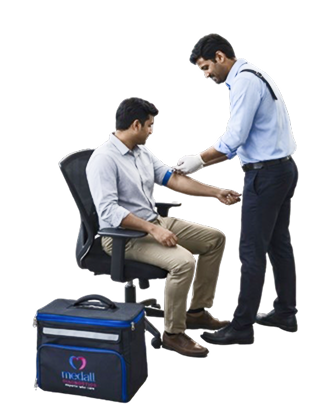
Book once, we handle the rest. Our certified phlebotomist arrives at your doorstep — your report is delivered within 24 hours.
Trusted by millions of Customers across South India — these are the tests our doctors recommend most.
Screens for anaemia, infections, and immune health