


Loading page…
The Erythrocyte Sedimentation Rate (ESR) test measures how quickly red blood cells fall to the bottom of a tube of anticoagulat...
Also known as: ESR Test · Sedimentation Rate Test · Westergren ESR · Sed Rate Test
Limited Offer | Best Price Guaranteed
Loading price…
Loading price…
*Inclusive of home collection charges


The Erythrocyte Sedimentation Rate (ESR) test measures how quickly red blood cells fall to the bottom of a tube of anticoagulated blood over one hour. It is a non-specific but highly sensitive marker of systemic inflammation — rising in response to a wide range of conditions including infections, autoimmune diseases, malignancies, and tissue injury. While not diagnostic for any specific disease, ESR is a valuable initial screening and disease monitoring tool that has been used in clinical medicine for over a century. No fasting required.
Key benefits of this package include:
What Does the Erythrocyte Sedimentation Rate (ESR) Test Measure?
| Level / Result | Possible Interpretation |
|---|---|
| Within normal range (age/sex adjusted) | No significant systemic inflammation detected |
| Mildly elevated (20–40 mm/hr) | Non-specific — may indicate mild infection, anaemia, early autoimmune condition, or physiological variation |
| Moderately elevated (40–70 mm/hr) | Active inflammation — infection (TB, osteomyelitis), early autoimmune disease, malignancy; further evaluation recommended |
| Markedly elevated (70–100 mm/hr) | Significant systemic disease — autoimmune flare (RA, SLE), chronic infection, advanced malignancy |
| Very high (> 100 mm/hr — extreme elevation) | Multiple myeloma, giant cell arteritis, polymyalgia rheumatica, severe sepsis, or advanced connective tissue disease — urgent evaluation |
| Low ESR (< 2 mm/hr) | May occur in sickle cell anaemia, polycythaemia vera, or extreme leukocytosis — clinical assessment required |
Important Note: ESR is highly non-specific — it can be elevated in dozens of conditions and is influenced by age, sex, anaemia, pregnancy, and medication. It should never be interpreted in isolation. A normal ESR does not rule out serious disease (e.g., localised malignancy without systemic inflammation), and an elevated ESR is not diagnostic of any specific condition. Always interpret ESR alongside CRP, CBC, and clinical findings.
ESR vs. CRP — Complementary, Not Competing: ESR and CRP (C-Reactive Protein) both measure inflammation but with different kinetics and clinical utility. CRP is produced by the liver within 6 hours of acute inflammation and normalises within days of resolution — making it a better marker for acute infections and monitoring rapid treatment response. ESR rises more slowly (over 24–48 hours) and falls slowly (over weeks) — making it more useful for monitoring chronic inflammatory conditions like RA, PMR, and TB over time. Both together provide the most complete inflammatory picture.

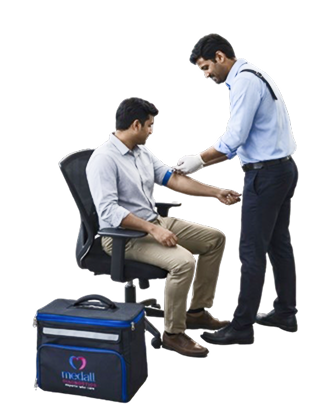
Book once, we handle the rest. Our certified phlebotomist arrives at your doorstep — your report is delivered within 24 hours.
Trusted by millions of Customers across South India — these are the tests our doctors recommend most.
Screens for anaemia, infections, and immune health