


Loading page…
The Electrolytes test (Na, K, Cl) measures three critical electrolytes — Sodium, Potassium, and Chloride — in your blood. These...
Also known as: Na K Cl Test · Serum Electrolytes · Electrolyte Panel · Sodium Potassium Chloride Blood Test
Limited Offer | Best Price Guaranteed
Loading price…
Loading price…
*Inclusive of home collection charges


The Electrolytes test (Na, K, Cl) measures three critical electrolytes — Sodium, Potassium, and Chloride — in your blood. These minerals regulate fluid balance, nerve signalling, muscle contraction (including the heart), and acid-base homeostasis. Abnormalities in electrolyte levels can indicate kidney dysfunction, hormonal disorders, dehydration, or medication side effects. No fasting required.
Key benefits of this package include:
What Does the Electrolytes Test (Sodium, Potassium & Chloride) Measure?
| Level / Result | Possible Interpretation |
|---|---|
| Low Sodium (< 136 mEq/L — Hyponatraemia) | Excess water retention, kidney disease, heart failure, liver cirrhosis, SIADH |
| High Sodium (> 145 mEq/L — Hypernatraemia) | Dehydration, diabetes insipidus, excessive sodium intake |
| Low Potassium (< 3.5 mEq/L — Hypokalaemia) | Diuretic use, vomiting, diarrhoea, hyperaldosteronism — risk of arrhythmia |
| High Potassium (> 5.0 mEq/L — Hyperkalaemia) | Kidney failure, Addison's disease, ACE inhibitor use — serious cardiac risk |
| Low Chloride (< 98 mEq/L — Hypochloraemia) | Vomiting, metabolic alkalosis, diuretic use |
| High Chloride (> 106 mEq/L — Hyperchloraemia) | Dehydration, renal tubular acidosis, diarrhoea |
Important Note: Electrolyte results must be interpreted together as a panel, and alongside kidney function tests, bicarbonate, blood pressure, medications, and clinical symptoms. Critical values (especially potassium abnormalities) require urgent medical attention.
Why Potassium Is the Most Critical Electrolyte to Monitor: While all three electrolytes are important, potassium abnormalities are the most immediately dangerous. Both high potassium (hyperkalaemia) and low potassium (hypokalaemia) can cause life-threatening cardiac arrhythmias. Patients on diuretics, ACE inhibitors, ARBs, or those with kidney disease require regular potassium monitoring. Medall's fast turnaround (6-hour reports) ensures timely clinical decision-making.

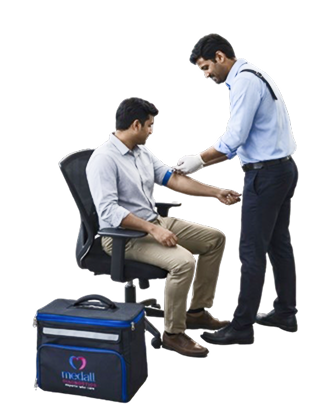
Book once, we handle the rest. Our certified phlebotomist arrives at your doorstep — your report is delivered within 24 hours.
Trusted by millions of Customers across South India — these are the tests our doctors recommend most.
Screens for anaemia, infections, and immune health