


Loading page…
The Creatinine test measures the level of creatinine — a waste product filtered by the kidneys — in your blood. Elevated creati...
Also known as: Serum Creatinine Test · Creatinine Blood Test · Kidney Function Creatinine · SCr Test
Limited Offer | Best Price Guaranteed
Loading price…
Loading price…
*Inclusive of home collection charges


The Creatinine test measures the level of creatinine — a waste product filtered by the kidneys — in your blood. Elevated creatinine is one of the most reliable early indicators of kidney dysfunction, making this a core component of the Renal Function Test (RFT/KFT) panel. No fasting required.
Key benefits of this package include:
What Does the Creatinine Test Measure?
| Level / Result | Possible Interpretation |
|---|---|
| Below 0.74 mg/dL (Low) | May indicate reduced muscle mass, malnutrition, or pregnancy |
| 0.74–1.35 mg/dL (Normal — Males) | Healthy kidney filtration |
| 0.59–1.04 mg/dL (Normal — Females) | Healthy kidney filtration |
| 1.35–2.0 mg/dL (Mildly elevated) | Early kidney dysfunction, dehydration, high-protein diet |
| 2.0–5.0 mg/dL (Moderately elevated) | Significant kidney impairment — further evaluation needed |
| Above 5.0 mg/dL (Severely elevated) | Severe kidney failure — urgent medical attention required |
Important Note: Creatinine results should always be interpreted by a qualified physician alongside eGFR, BUN, urine analysis, and clinical context.
Why Creatinine Is Measured Alongside BUN and eGFR: A standalone creatinine level is informative but becomes far more clinically useful when paired with Blood Urea Nitrogen (BUN) and the calculated eGFR. The BUN:Creatinine ratio helps distinguish between pre-renal causes (dehydration, blood loss) and intrinsic kidney disease. eGFR, calculated from creatinine, age, sex, and body size, provides a standardised estimate of how well your kidneys are actually filtering blood.

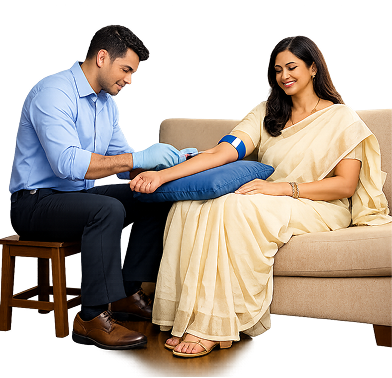
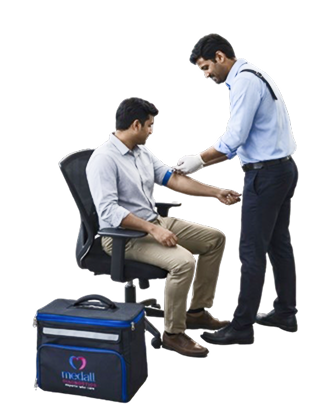
Book once, we handle the rest. Our certified phlebotomist arrives at your doorstep — your report is delivered within 24 hours.
Trusted by millions of Customers across South India — these are the tests our doctors recommend most.
Screens for anaemia, infections, and immune health