


Loading page…
The Absolute Eosinophil Count (AEC) test measures the exact number of eosinophils — a type of white blood cell specialised in f...
Also known as: AEC Test · Eosinophil Count · Eosinophils Blood Test · Eosinophilia Test
Limited Offer | Best Price Guaranteed
Loading price…
Loading price…
*Inclusive of home collection charges


The Absolute Eosinophil Count (AEC) test measures the exact number of eosinophils — a type of white blood cell specialised in fighting parasitic infections and mediating allergic responses — circulating in the blood. An elevated eosinophil count (eosinophilia) is a key diagnostic clue pointing to parasitic infections, allergic diseases (asthma, allergic rhinitis, eczema), drug reactions, autoimmune conditions, and — rarely — malignancies. The AEC provides a more precise count than the percentage-based differential white cell count. No fasting required.
Key benefits of this package include:
What Does the Absolute Eosinophil Count (AEC) Test Measure?
| Level / Result | Possible Interpretation |
|---|---|
| 100–500 cells/µL (Normal) | Normal eosinophil count — no significant allergic or parasitic response |
| 500–1,500 cells/µL (Mild eosinophilia) | Most commonly allergic — asthma, hay fever, eczema, food allergy; drug reactions |
| 1,500–5,000 cells/µL (Moderate eosinophilia) | Parasitic infections (helminths), significant drug reactions, eosinophilic organ disorders |
| > 5,000 cells/µL (Severe — Hypereosinophilia) | Risk of organ damage (heart, lungs, nervous system) — urgent specialist evaluation required; consider HES, CSS, malignancy |
| < 100 cells/µL (Eosinopenia) | May occur with acute bacterial infections, corticosteroid use, or Cushing's syndrome — generally not clinically significant |
Important Note: AEC elevation is non-specific — many conditions cause eosinophilia. The degree of elevation, clinical history, geographic exposure, medications, and associated symptoms guide the differential diagnosis. Severe hypereosinophilia (> 5,000/µL) requires urgent specialist evaluation to rule out organ-damaging Hypereosinophilic Syndrome (HES) and malignancy. All results should be reviewed by a physician.
Eosinophilia in the Indian Context: Parasitic infections are a leading cause of eosinophilia in India. Common culprits include intestinal helminths (Ascaris, hookworm, Strongyloides), filariasis (Wuchereria bancrofti), and tissue-invasive parasites (Toxocara). Tropical pulmonary eosinophilia (TPE) — caused by filarial larvae in the lungs — is a distinctive Indian condition presenting with nocturnal cough, wheezing, and markedly elevated AEC (often > 3,000/µL). Stool examination for ova and parasites and serological tests complement AEC in parasitic diagnosis.

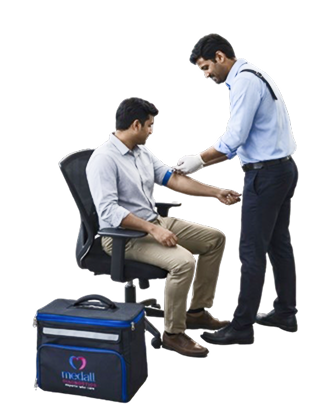
Book once, we handle the rest. Our certified phlebotomist arrives at your doorstep — your report is delivered within 24 hours.
Trusted by millions of Customers across South India — these are the tests our doctors recommend most.
Screens for anaemia, infections, and immune health